UBC offers a Royal College of Physicians and Surgeons of Canada accredited two-year sub-specialty postgraduate training program in General Internal Medicine (GIM).
The UBC GIM Fellowship Program welcomes applicants wishing to pursue community-based practice (including rural and remote practice) and those pursuing academic careers.
The PGY-4 year is focused on obtaining the breadth of skills for the practice of General Internal Medicine. The fellowship is characterized by graded responsibility and increasing levels of independence in decision-making under supervision. By the end of the PGY-4 year, the resident will be able to demonstrate a level of knowledge, clinical skills, technical skills, and attitudes consistent with independent consulting practice.
The PGY-5 year is extremely flexible based on the career path of the resident. PGY-5 may focus on the development of a specific skill set to compliment the breadth of General Internal Medicine practice.
Application and Admissions
All applications are done through the CaRMS Fall Subspecialty Residency Match (FSRM). For more information including details on eligibility, application process and timeline see CaRMS FSRM.
The number of incoming residents accepted each year is contingent on funding from the BC Ministry of Health and UBC Post Graduate Medical Education.
Program Curriculum
The total duration of the program is two years divided into 26 blocks (four weeks per block).
The UBC GIM program is a provincial program and many rotations in the PGY-4 year are taken in various communities around British Columbia.
Residents wishing to spend dedicated training time in a particular health region (eg. Island, Fraser, Interior, Northern, etc.) can typically be accommodated as long as the mandatory Royal College requirements are met.
Mandatory Rotations (PGY-4)
- 4 blocks Community General Internal Medicine (see below for potential communities)
- 1 block Critical Care Medicine (Richmond, Kelowna or Nanaimo. Other regional sites are possible)
- 1 block Cardiology (Royal Jubilee Hospital, Victoria)
- 1 block Obstetric Medicine (BC Children’s & Women’s Hospital, Vancouver)
- 1 block Perioperative Medicine (Vancouver General Hospital, Royal Columbian Hospital, or St. Paul’s Hospital)
- 1-2 blocks Junior Attending (can be scheduled anytime, though recommended towards the end of PGY-4. Usual sites options include Vancouver General Hospital, St. Paul’s Hospital, Royal Columbian Hospital and Royal Jubilee Hospital, and other sites are possible)
- 48 weeks of longitudinal clinic(one half-day per week over two years +/- rural outreach clinics)
Mandatory Rotations (PGY-5)
- 1 block Junior Attending (depending on how many blocks are completed during PGY-4)
- Balance of longitudinal clinics to ensure 48 weeks of longitudinal clinic (one half-day per week over two years)
Potential Community General Internal Medicine rotation sites: Burnaby, Delta, Campbell River, Comox, Chilliwack, Cranbrook, Duncan, Kamloops, Nanaimo, Nelson, Penticton, Port Alberni, Richmond, Salmon Arm, Salt Spring Island, Smithers, Surrey, Terrace, Trail, Vernon, Victoria, and others.
The balance of rotations for the PGY-4 year are planned in discussion with the Program Director and Program Coordinator. Commonly chosen electives include: Addictions, Ambulatory Hematology, Ambulatory Cardiology, CKD Clinics, Healthy Heart Clinics, Neurology, Palliative Care, POCUS, Thrombosis, more Community General Internal Medicine or other sub-specialty rotations.
The PGY-5 year of GIM Fellowship at UBC is extremely flexible. Our mandate is to train residents for their future career in GIM and to meet the needs of our patients. With guidance from the Program Director, and providing all mandatory rotations have been completed, residents are permitted to undertake training that is specifically tailored to their intended future practice plans.
Some PGY-5 training pathways that have been followed previously include:
- Clinical areas of expertise: Addictions, Cirrhosis, Obstetric Medicine, Lipidology (Beedie Fellowship), Metabolic (HTN, Lipids, Obesity), Palliative Care, Perioperative Medicine, Thrombosis, etc.
- Technical skills: POCUS, ECHO*, Bronchoscopy*, etc. (*typically pursued when there is a specific community site identified requiring a General Internist with these skills).
- Expertise in Medical Education: UBC CHES Clinical Educator Fellowship Program
- Expertise in Health Research: UBC Clinician Investigator Fellowship Program (CIP)
- Other: Masters of Public Health, Masters in Quality Improvement, Masters in Ethics, courses in leadership and global health; building the first comprehensively integrated healthcare network in sub-Saharan Africa. What is your passion? How can we help you get there?
The above described PGY-5 training paths are not exhaustive are not meant to be limiting. The program is open to novel training plans to help residents achieve their desired career goals. In cases where the desired training cannot be fully achieved within the resources at UBC, the program is flexible in allowing trainees to train at other sites across Canada and abroad. Planning for the PGY-5 begins upon acceptance into the program and is done in discussion with the Program Director.
Longitudinal Clinic (48 half days over 2 years)
The goal of longitudinal clinic is to establish expertise in ambulatory practice. Typically, longitudinal clinic is scheduled as a half day per week or a full day every other week. Each Resident works with their own longitudinal preceptor.
There are opportunities for rural outreach longitudinal clinics in remote areas (eg. Ahousaht, Burns Lake, Hazelton, and others). These longitudinal clinics typically run for a few days every few months.
Scholarly Sessions (Academic Full Day)
Scholarly Sessions (Academic Full Days) are a series of lectures and workshops that follow a curriculum of high-yield topics covering the breadth of General Internal Medicine. They are typically held once a month from September to June. Scholarly Sessions are considered protected time and residents are relieved from their clinical duties to attend.
Journal Club
Journal Club is an interactive forum to critically appraise emerging evidence. During the PGY-4 year, each GIM resident is expected to present an article at the Journal Club. Journal Club is held approximately once per month. All GIM residents and faculty are invited to attend.
Research/Scholarly Project
Engagement in scholarship is part of the well-rounded training of GIM subspecialists and a Royal College requirement. During the GIM Fellowship, each resident will engage in some form of scholarly work. This may include something related to a health research project, case report, in-depth critical appraisal, systematic review, quality improvement, quality assurance, system redesign or other related work.
The focus of each resident’s scholarly work is typically associated with the focused training pursued in the PGY-5 year.
For those not yet connected to a research/scholarship mentor, this can be arranged through the Program Director and the Research Lead. By the end of the PGY-5 year, each GIM resident is expected to present their research/scholarly work at the GIM Resident Research Day.
Quality Improvement Retreat
With the goal of further improving the program, GIM residents are invited to attend the annual GIM Fellowship Quality Improvement Retreat. This 1-2 day event is typically held each winter and is an opportunity to reflect on opportunities to further enhance the fellowship.
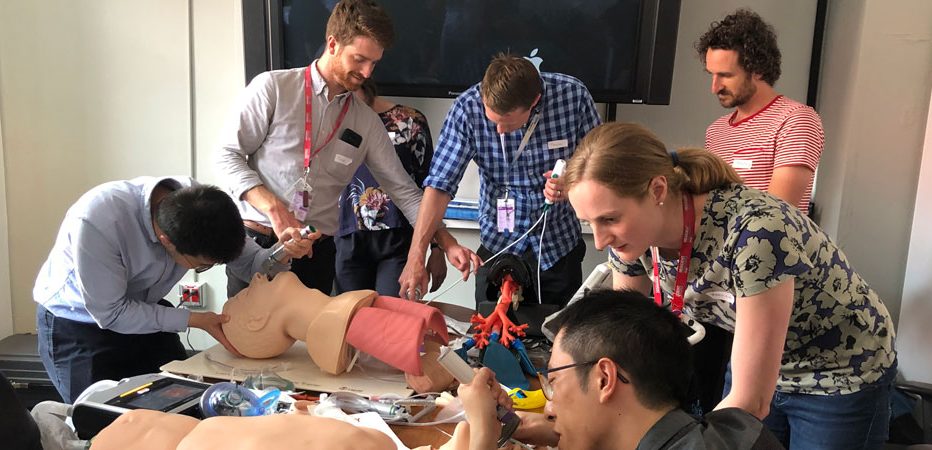
Bootcamp
Bootcamp kicks off the year for incoming PGY-4s. It serves as an orientation to the UBC GIM program, an opportunity to develop fellowship cohesiveness, and covers high-yield topics to prepare residents for their upcoming year. Topics often include critical care (e.g., airway workshop) and cardiology (e.g., introduction exercise stress testing) and others. Bootcamp includes lectures, workshops, team building exercises and other small group sessions. Bootcamp is held every year at the beginning of July.